A glorious delegation to Pyongyang

Click on the image to watch the trailer

Synopsis

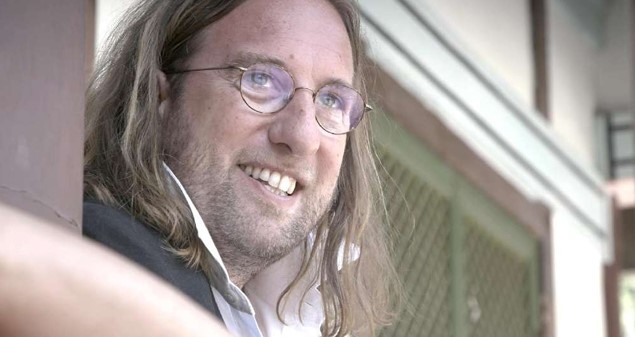
Four friends set out on a journey to North Korea to accompany one of them, Davide Rossi – a writer, journalist, teacher, and member of the Swiss Communist Party – who has received an invitation from the Central Committee of the Workers’ Party in Pyongyang. The film follows their journey, portraying the four friends both in their daily lives and through the comparison of their viewpoints, with the aim of bearing witness to life in the Democratic People’s Republic of Korea. Often denigrated by Western narratives, the country appears to live in a parallel universe – one that seems to overlook the strong sense of individuality and the high level of education of the Korean people. The journey is led by Davide Rossi, a long-time friend of the People’s Republic of Korea, who brings as a gift his latest book, “The Relevance of Karl Marx’s Thought.” 

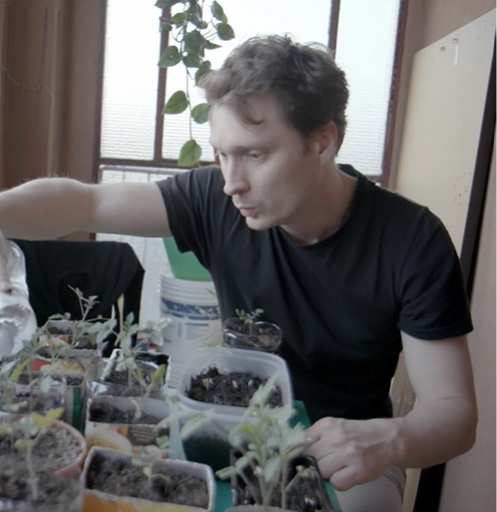
The group includes IVAN, a Russian man who has long wished to visit North Korea in search of the childhood he had experienced before the collapse of the Soviet Union. 

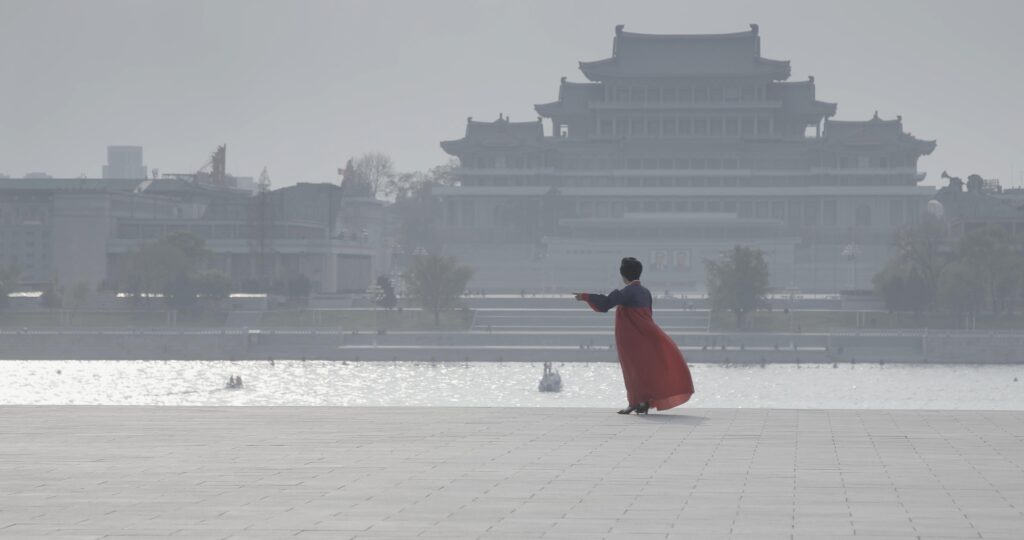
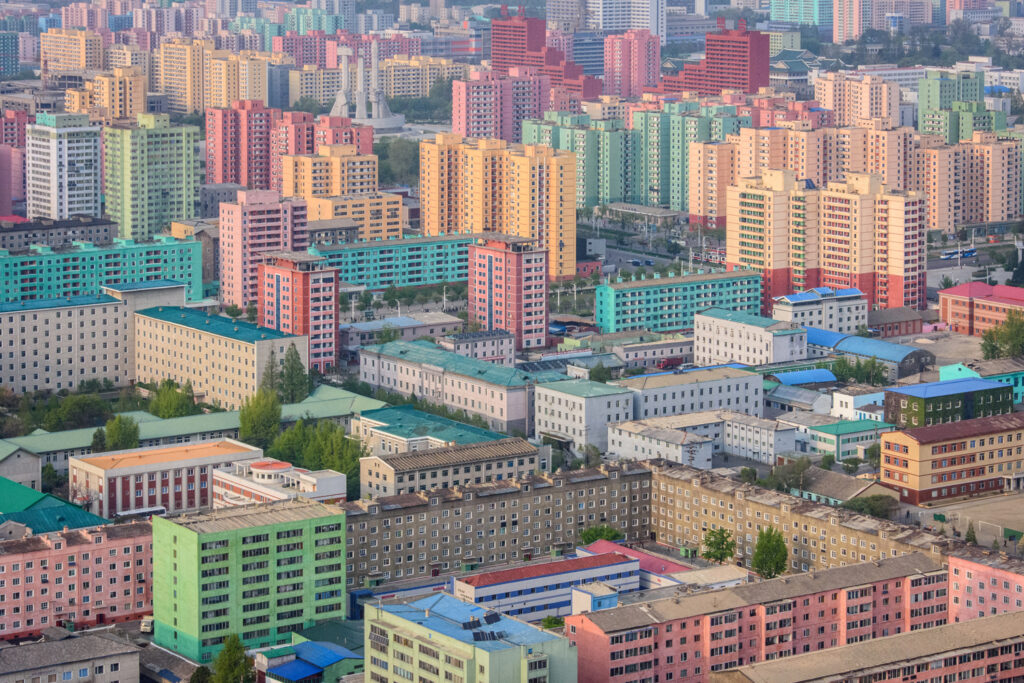
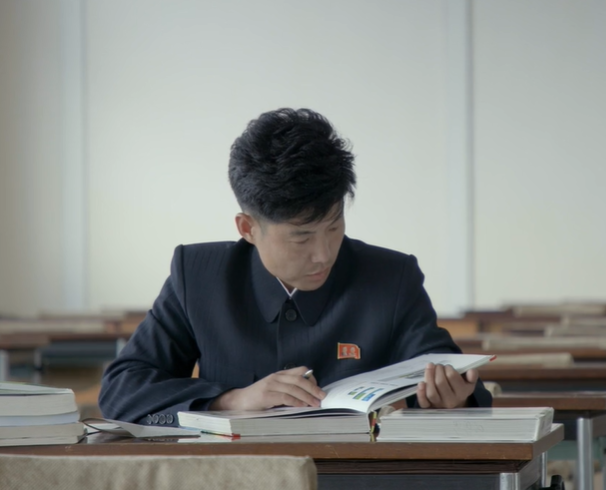
He rediscovers it in the Soviet-built apartment blocks glimpsed from the window of a bus, or when he suddenly begins speaking Russian with a guide he meets at the State Library on Kim Il Sung Square – eventually stepping into the guide’s role himself and explaining how the library works to his fellow travelers.

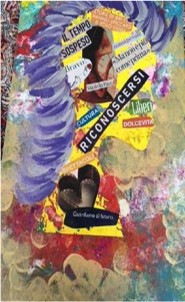
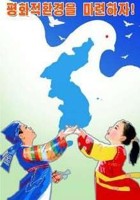
Then there is BARBARA, an Italian woman who misses her childhood in Venezuela. She finds inspiration in the Korean atmosphere and creates a painting of a reunified Korea, composed in her hotel room in Pyongyang. While, from her window overlooking the square, the voice of propaganda calls workers to the start of their day, Barbara assembles her collage by cutting out words and images from a Korean newspaper.

Her relationship with the group is always slightly provocative – but hers is a warm, friendly provocation, of the kind only a South American can embody when discussing and debating the meaning of freedom and the possibility of choice in life. These, in her view, are the most important achievements of the Western society in which she lives and which she would not give up – a way of thinking and a vision that are also shared by the director.

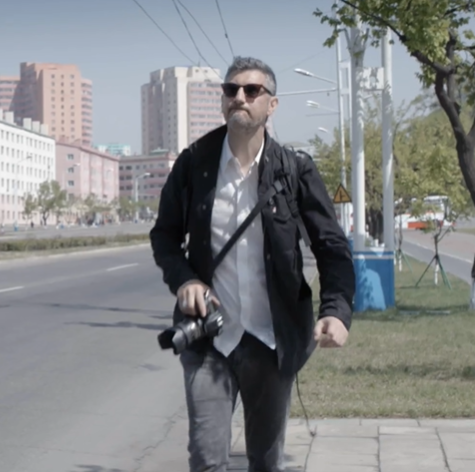
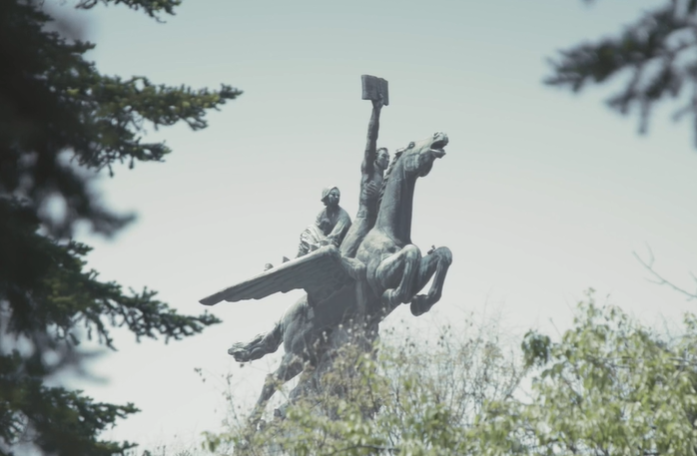
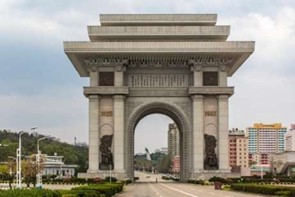
The third member of the group is PIERLUIGI, the son of factory workers, who had always dreamed of becoming a photographer but was forced to take on other jobs to earn a living. Walking through Pyongyang, he rediscovers both his passion and his dream, and begins taking photographs again. We often see him drifting away from the group and, almost in a trance, trying to photograph the statue of Chollima – the winged horse symbolizing the speed of the Korean people – which can only just be glimpsed inside the world’s tallest triumphal arch. 

It is Barbara who discovers his photographs by chance and encourages him to continue, as he slowly overcomes his shyness and begins to tell her about his life.

And then there is DAVIDE, the “Comandante Che Guevara” of the film, who cycles through Milan with his shirt collar turned up à la Robespierre – the only eccentric touch in an otherwise casual style – accompanied by a slightly ramshackle musical interpretation of Che’s famous song. Davide is the only one of the four who does not seek the ghosts of his childhood in Korea, as Ivan does, nor is he shaped by atmospheres that lead him to reflect on his own life, as happens to Barbara and Pierluigi.

Davide, who has dedicated one of his most beautiful books to Korea, continues to love the country, yet now feels it to be distant from what he identifies as the future of socialism – outlined in his book “The Relevance of Karl Marx’s Thinking”: a socialism concerned not with the distribution of poverty, but with the distribution of wealth, tied to productive strength protected by the state, and now, in his view, triumphing in China, the world’s largest economic power. 

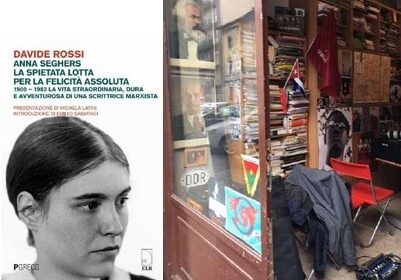
The documentary opens in Milan, where Davide Rossi lives and works, moving between his roles as writer, journalist, critic, and historian. Among other activities, he is the head of a study center dedicated to the German-Jewish writer from the former GDR, Anna Seghers.

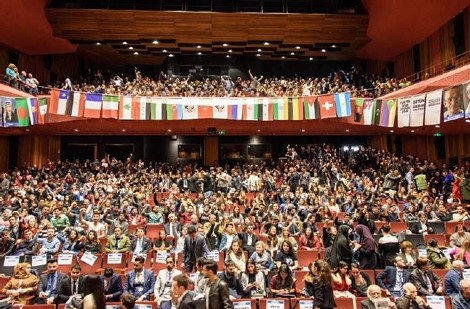
The journey then continues to Istanbul, where, after meeting photographer Pierluigi Colombini, we attend the “Conference of Young Anti-Imperialists of the Earth.”

From there, we travel to Bern, home to the Embassy of the Democratic People’s Republic of Korea, where we discover a little-known side of Switzerland connected to the Communist Party.

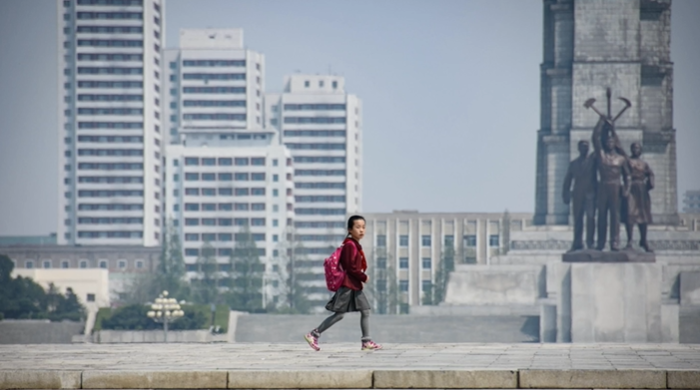
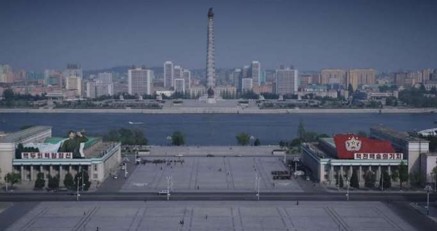
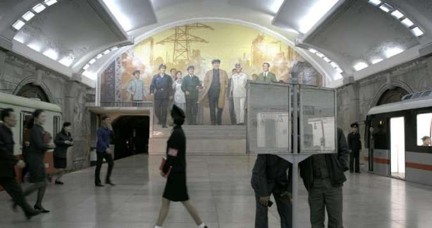
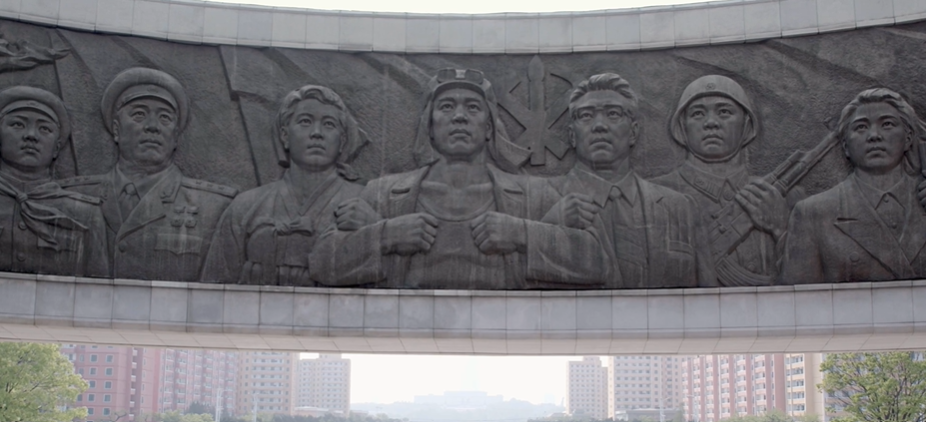
But the heart of the film unfolds in the Democratic People’s Republic of Korea, among underground metro stations, the Juche Tower, the Party Monument…


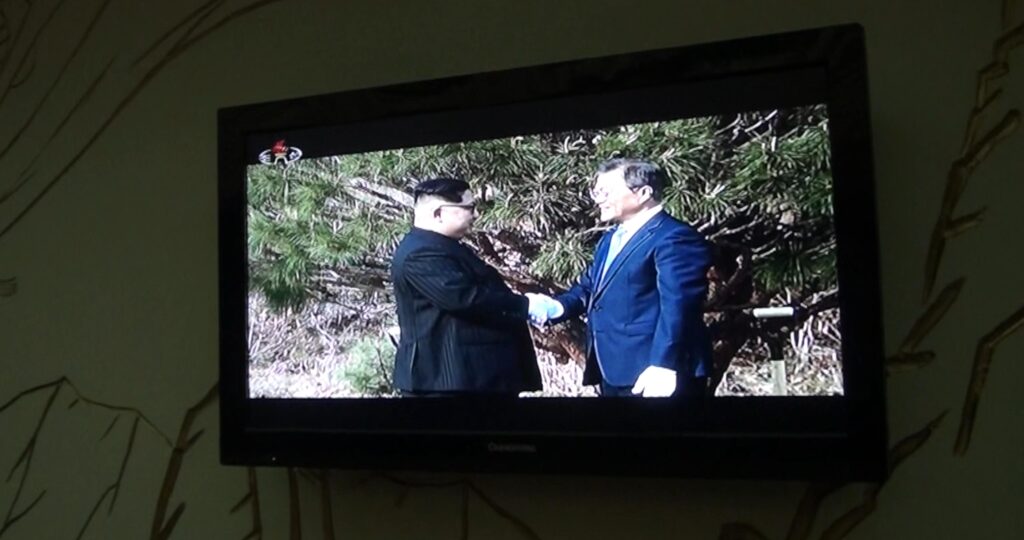
…and the historic meeting at Panmunjom on 27 April 2018 between Kim Jong‑un and Moon Jae‑in, broadcast live on Korean television, in support of a reunified Korea. 

Our crew was just a few kilometers from the Demilitarized Zone where the two presidents met, spending an entire day together and deciding to plant a Korean pine tree – an image shown to the world as a symbol of the future unity of Korea.

The film concludes in Beijing. 

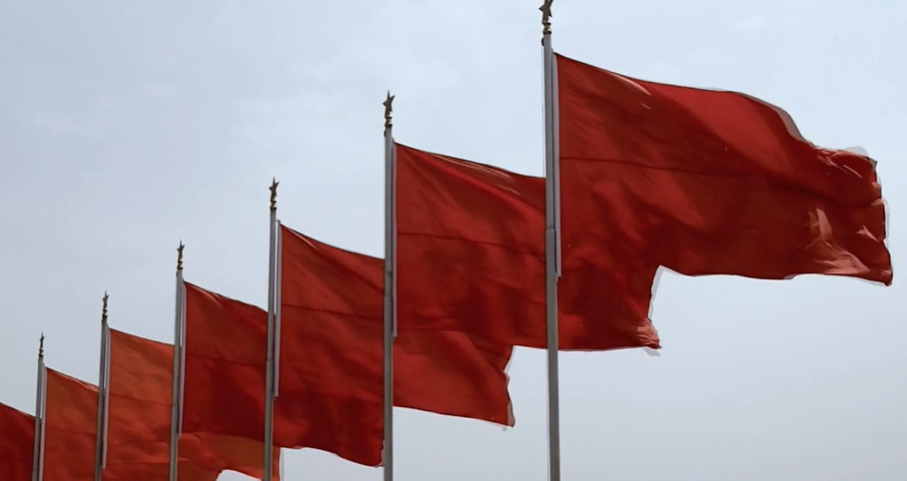
It is in Tiananmen Square, amid the triumphant waving of red flags on 1 May, that Davide loses himself in what Barbara jokingly calls his “playground.” While he explains the surrounding buildings to his friends with cultured rationality, Davide wanders toward a new structure where a portrait appears to have been added. Curious to discover who it is, he turns the corner and comes face to face with an old acquaintance: Sun Yat‑sen, father of the nation, born on the same day as Davide himself – and whose presence there, inexplicably, no one had warned him about, positioned directly in front of Mao’s portrait.

It is here, in Beijing, at the heart of socialist China, that a challenge emerges between Davide and Ivan, rooted in a difference of opinion. With the help of an Italian-speaking interpreter, the group begins asking the Chinese people they encounter on the streets and in public parks whether they feel they are the heirs of Karl Marx’s thought, expressed through state-controlled productivity – an approach that today makes China the strongest economic power in the world. 

What do the Chinese think about this? Do they feel socialist – and what does socialism mean to them? What are their dreams, their myths, their perspectives? What do they value, and what do they reject, in their history? What does it mean for them to be the world’s greatest power? Do they truly believe they are? What do they love, and what do they fear? Is China – embodied and represented by Tiananmen Square – truly the socialist dream of state-controlled productivity described by Marx?

The film ends with the voices of the Chinese themselves, who, a few days later on 5 May, will celebrate the bicentenary of Karl Marx’s birth – the only people in the world to have sent a statue dedicated to him to Trier, the philosopher’s birthplace.

PRIZE ISPEC 2019

INTERNATIONAL PEACE FESTIVAL OF PYEONGCHANG 2019
SUDESTIVAL OFFICIAL SELECTION 2019

ARFF AMSTERDAM OFFICIAL SELECTION 2019

PORTUGAL INTERNATIONAL FILM FESTIVAL OFFICIAL SELECTION 2019
CREATION INTERNATIONAL FILM FESTIVAL 2019
DUMBO FILM FESTIVAL OFFICIAL SELECTION 2019

VISION DU REEL MEDIA LIBRARY 2019

VISIONI DAL MONDO INTERNATIONAL FESTIVAL OFFICIAL SELECTION 2018

director's note

I came across this project on North Korea almost by chance, following a question I had asked a Russian friend, Ivan. At the time, I had involved him in another film project based on the true story of a stateless person. Back then, I knew very little about North Korea. Yet my curiosity was sparked when Ivan described it to me as a kind of small Eden – a perfect, romantic honeymoon destination. Intrigued by this description, I began reading and watching films in order to understand more, only to be confronted with an image of a dangerous and terrifying country.

The desire to verify whether everything offensive, grotesque, and alarming that is said, written, and filmed about the People’s Republic of Korea is actually true convinced me to make this film. Beyond political beliefs and ideological conditioning, the film aims to compare the reflections of four friends as they confront a different way of life.

The entire narrative also interacts with the behind-the-scenes reality of the film crew at work. The film follows a style that deliberately avoids ideological persuasion, choosing instead to present events as they unfold during this specific journey. The viewer is left free to reflect and decide how to interpret what they see, in keeping with the intention of telling a story rooted in CINÉMA DU RÉEL.

SUBJECT: PEPI ROMAGNOLI

SCREENPLAY: PEPI ROMAGNOLI

DIRECTOR: PEPI ROMAGNOLI

CAST: DAVIDE ROSSI, IVAN SENIN, PIERLUIGI COLOMBINI, BARBARA CLARA

PHOTOGRAPHY: GIORGIO CARELLA

OPERATORS: GIORGIO CARELLA, FRANCO OBERTO, ALESSANDRO PECCHI

SOUND: PAOLO BENVENUTI

ASSISTENT DIRECTOR: DAVID PUTORTI’

PRODUCED BY: MICHELANGELO PASTORE

WITH THE COLLABORATION OF EXECUTIVE PRODUCER: RICCARDO PINTUS

EDITING AND POSTPRODUCTION SUPERVISOR: MASSIMO GERMOGLIO

LENTH: 90/52 – SHOTTING FORMAT: 4K/3K/HD – MASTER: 2K/HD

ITALIAN DISTRIBUTION: OFFICINE UBU

INTERNATIONAL DISTRIBUTION: TRUE CONTENT ENTERTAINMENT INTERNATIONAL